
10 Tips for Using a Dash of Salt and Pepper Perfectly
To use salt and pepper perfectly, start with small amounts like ½ teaspoon table salt or 1 teaspoon kosher salt, and taste as you go. This way, you won’t overdo it and can adjust the seasoning just right.
Sprinkling evenly from 6-12 inches helps give balanced coverage across your dish.
After searing or reheating leftovers, don’t forget to re-season. It’s a simple trick to keep the flavors fresh and vibrant every time.
Also, using freshly ground pepper daily really makes a difference in taste, adding that perfect punch.
Choosing the right salt is key too—it can enhance both texture and flavor.
And remember, store your salt and pepper airtight in a cool, dry place to keep them fresh longer.
Keep these tips in mind, and you’ll discover even more secrets to seasoning like a pro!
Key Takeaways
– Start with small amounts of salt and pepper, adjusting gradually while tasting to avoid over-seasoning.
It’s always easier to add more than to fix a dish that’s too salty or peppery.
– Use kosher salt for even seasoning and freshly ground pepper to maximize flavor and aroma.
Freshly ground pepper really makes a difference, trust me!
– Sprinkle salt and pepper from 6-12 inches for controlled, uniform distribution without clumps.
This little trick helps you avoid those annoying salty or peppery spots.
– Re-season leftovers carefully after reheating to restore balanced flavors without overpowering the dish.
Sometimes flavors fade after reheating, so just add a pinch more if needed.
– Store salt and pepper in airtight containers, away from moisture and light, to maintain freshness and potency.
Keeping them fresh means your dishes will always taste their best!
Why Salt and Pepper Matter in Cooking
Although they seem simple, salt and pepper play essential roles in cooking by enhancing and balancing flavors in your dishes. Salt amplifies the natural flavors of your ingredients, making everything taste more vibrant and well-rounded.
Without salt, dishes can feel flat or dull, even with quality ingredients. Pepper, on the other hand, adds a mild heat and complexity that balances savory and spicy notes, giving your recipes a subtle kick.
When you season properly with salt and pepper, you can elevate even the simplest dishes, making them more flavorful without needing extra ingredients. Timing also matters—adding salt and pepper at different stages of cooking affects the final taste, so knowing when to season is key.
Using fresh ground pepper and the right salt enhances flavor enhancement, ensuring your meals taste their best. By mastering salt and pepper, you gain access to a powerful way to improve your cooking every time.
Know How Salt Types Affect Flavor
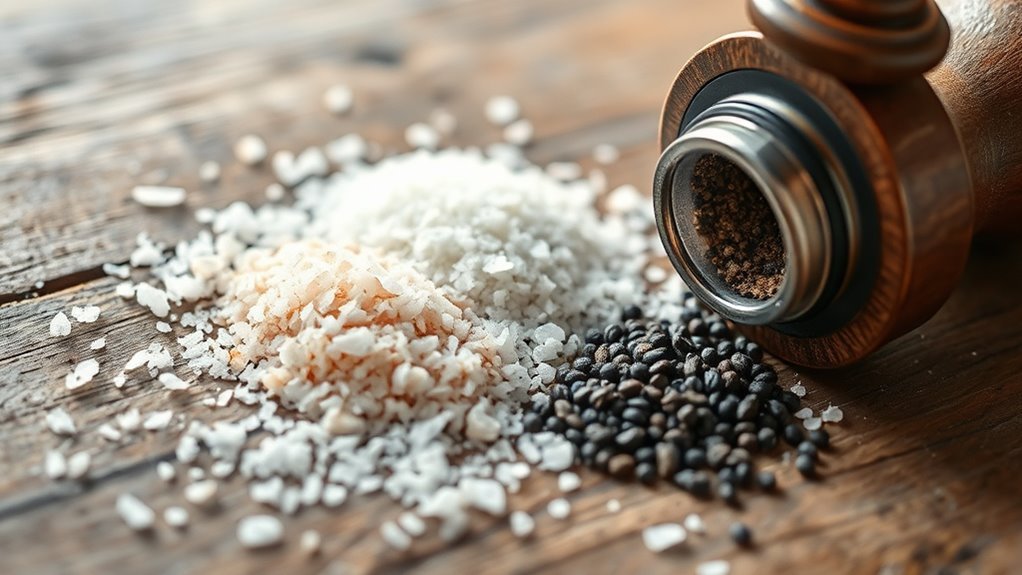
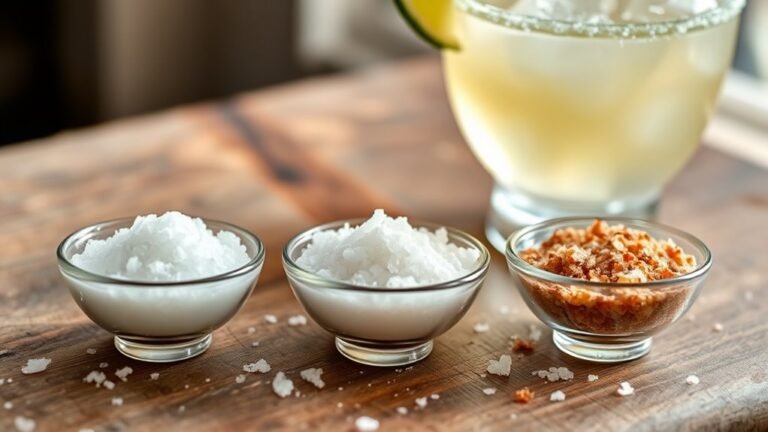
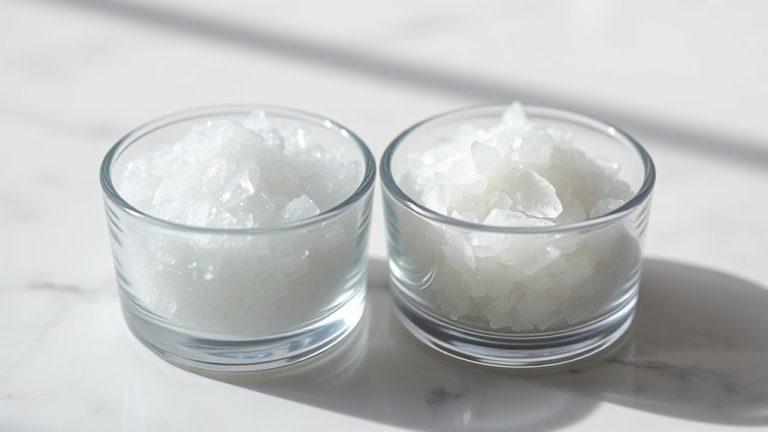
When you choose the right type of salt, you can transform your dish’s flavor and texture in subtle but impactful ways. Sea salt, especially flaky varieties, adds a delicate crunch and subtle mineral notes that enhance your dish’s flavor profile without overpowering it.
Table salt, on the other hand, has finer grains that dissolve quickly and distribute evenly, making it perfect when you need precise seasoning. However, its additives sometimes give it a more intense taste, so use it carefully.
Each salt type influences your dish differently—mineral-rich salts like sea salt impart earthy or briny undertones, while table salt keeps flavors straightforward and sharp. Understanding these differences helps you pick the ideal salt to boost your recipe’s taste and texture.
Use Kosher Salt and Freshly Ground Pepper for Best Taste
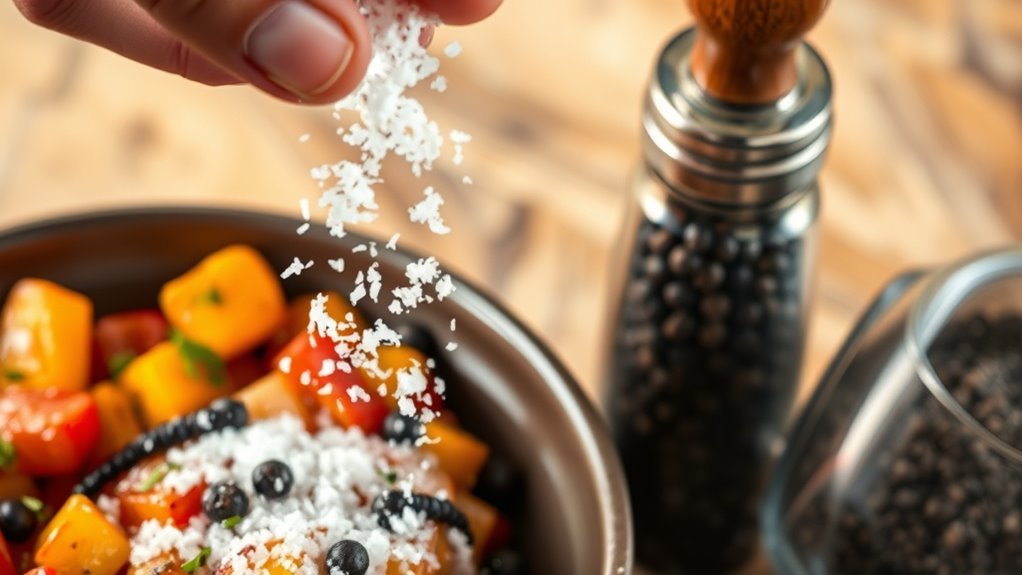
Because kosher salt has larger, coarser grains that dissolve more slowly, it seasons your food more evenly and gives you better control than fine table salt. Its texture lets you sprinkle it precisely, helping you avoid over-salting.
Kosher salt’s coarse grains dissolve slowly, offering even seasoning and precise control to avoid over-salting.
When you pair kosher salt with freshly ground pepper, you elevate your seasoning game even more. Grinding pepper just before use releases essential oils and volatile compounds that boost its flavor and aroma, unlike pre-ground pepper that loses potency over time.
Using these two together allows you to season with confidence, ensuring each dish has the right balance. So, keep a grinder handy and opt for kosher salt to measure and distribute seasoning accurately.
This simple switch makes a noticeable difference in taste, adding depth and enhancing your cooking. In short, using kosher salt and freshly ground pepper is a straightforward way to perfect your seasoning and bring out the best flavors in every meal.
Start With Small Amounts of Salt and Pepper and Taste as You Go
Start by seasoning your dish with just a small pinch of salt and pepper. Taste it before you add more, so you can avoid overpowering the flavors.
Adjust gradually to find the perfect balance every time. It’s all about adding a little, tasting, and then deciding if it needs more.
Begin With Minimal Seasoning
Although it might be tempting to add a lot of salt and pepper right away, using small amounts first gives you better control over the flavor. When you begin with minimal seasoning, you reduce the risk of overpowering your dish.
Use table salt sparingly—start with just ½ teaspoon or a few grinds of pepper. This lets you adjust gradually and achieve balance without guessing.
| Seasoning Amount | Salt Type | Pepper Amount |
|---|---|---|
| ½ teaspoon | Table salt | 3-4 grinds |
| 1 teaspoon | Kosher salt | 5-6 grinds |
| 1½ teaspoons | Sea salt | 7-8 grinds |
Use this as a guideline to begin seasoning lightly, ensuring your dish’s natural flavors shine. It’s all about letting those flavors come through, not covering them up.
Taste Before Adding More
When you add just a small pinch of salt and pepper and taste your dish, you gain control over its flavor without risking over-seasoning. Start with minimal seasoning, then taste carefully using a small spoon or fingertip.
This helps you judge the dish’s current flavor and decide if it needs more. By tasting frequently, you maintain control over the seasoning process and avoid accidentally adding too much salt or pepper.
Remember, flavors intensify as your dish cooks or rests, so adjusting seasoning gradually is key. Taking the time to taste as you go ensures you enhance your dish perfectly, balancing flavors without overpowering them.
This simple habit keeps your seasoning precise and your taste buds satisfied.
Adjust Gradually For Balance
Because flavors deepen as you cook or let your dish rest, adding salt and pepper gradually gives you better control over the final taste. Start with a small pinch of seasoning, then taste before adding more.
This approach helps you avoid over-seasoning and lets you adjust the balance precisely. When you add seasoning little by little, you maintain control and can identify the right amount that suits your taste.
Especially with new recipes, this method prevents salt or pepper from overpowering the dish. Always taste after each addition to ensure the flavor develops perfectly.
Add Salt and Pepper Gradually: It’s Easier Than Removing
Since you can’t easily remove salt or pepper once added, start by seasoning your dish gradually. Gradual seasoning lets you control flavor better and avoid over-seasoning, which can ruin a meal.
Add small amounts of salt and pepper, then perform taste testing after each addition. This step helps you determine the perfect balance without risking an overly salty or peppery dish.
It’s much easier to adjust seasoning little by little than to fix a dish that’s already too heavy with salt or pepper. Gradual seasoning also prevents wasting ingredients and ensures your food tastes just right every time.
Season Raw Meat for Better Crust and Flavor
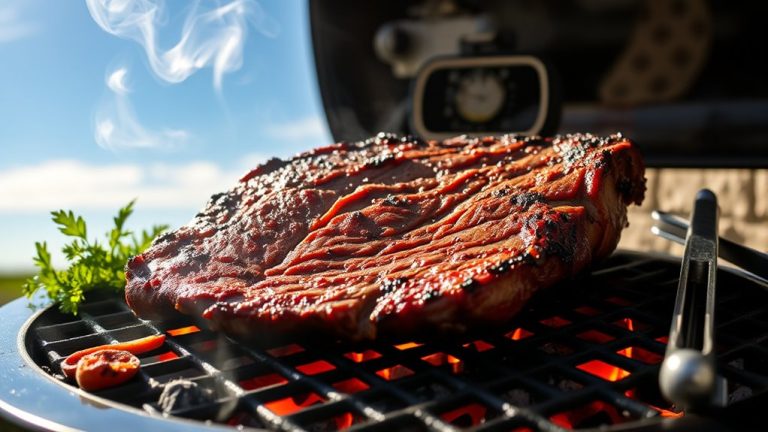
Season your raw meat just before searing to keep it juicy and achieve a crispy crust.
Hold your hand high when sprinkling salt and pepper to spread the seasoning evenly.
This simple step makes all the difference in flavor and texture. Give it a try!
Season Before Searing
If you want a flavorful crust and tender meat, sprinkle salt and pepper on the raw cut before searing. Seasoning early enhances crust formation by allowing salt to penetrate the meat, which also improves tenderness.
Use a light hand and sprinkle coarse salt and freshly ground pepper evenly from a height for consistent coverage. After seasoning, let the meat rest a few minutes before searing; this resting time helps the flavors set and moisture redistribute.
This simple step guarantees your seared meat develops a rich, well-seasoned crust that locks in juices. By seasoning before searing and allowing a brief resting period, you’ll elevate both the texture and depth of flavor in your dish every time.
Even Spice Distribution
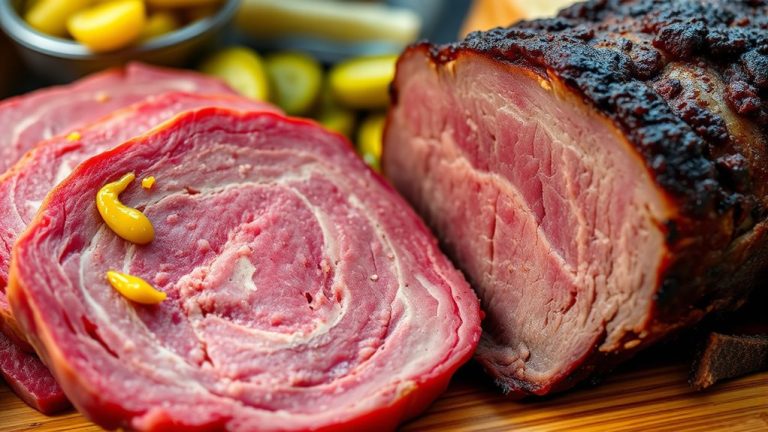
When you sprinkle salt and pepper from a height, you create an even layer that guarantees every bite of your meat is perfectly seasoned. This seasoning technique assures even spice distribution by allowing the salt and pepper to fall gently and uniformly across the surface.
For best results, mix salt and pepper in a small bowl beforehand, so you get consistent and balanced flavor with each sprinkle. Coarsely ground pepper adds texture and helps form a flavorful crust when searing.
Applying a uniform seasoning layer enhances the Maillard reaction, improving both crust and flavor. Don’t forget to re-season after the initial sear if needed, maintaining even spice distribution throughout cooking.
This simple step really elevates your meat’s taste, locking in rich, savory notes every time. Give it a try—you’ll notice the difference!
Sprinkle Salt and Pepper Evenly From a Height
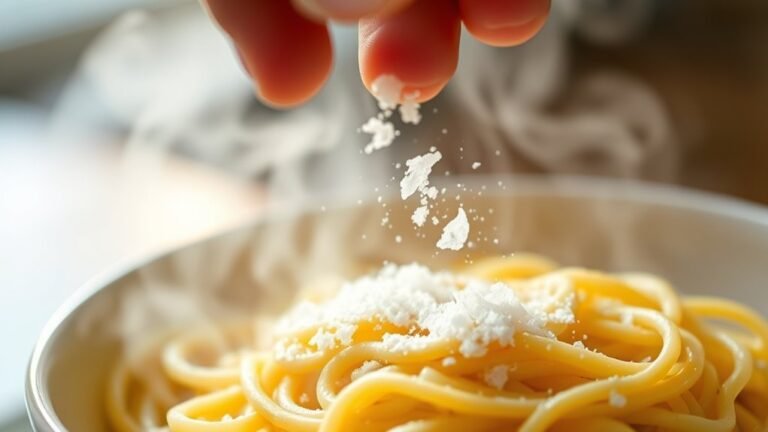
Although it might seem simple, sprinkling salt and pepper from about 6 to 12 inches above your dish helps you spread the seasoning evenly. This technique, known as sprinkling from height, creates a controlled spray that disperses spices widely, preventing clumps and concentrating flavor in one spot.
Holding the shaker at this height gives you even seasoning with a light, balanced touch. Use a quick, gentle motion to maintain control and avoid over-seasoning.
Practicing this height and motion consistency improves your skill in seasoning food perfectly every time.
| Tip | Benefit |
|---|---|
| Sprinkle 6-12 inches up | Even seasoning spread |
| Use gentle, quick motion | Prevents clumping |
| Maintain consistent height | Controlled spray |
| Practice regularly | Balanced seasoning skill |
Mastering this simple habit elevates your seasoning game, making every dish taste just right.
Adjust Seasoning After Cooking and When Reheating Leftovers
After cooking or reheating leftovers, always taste your dish before adding salt and pepper. Flavors can change, so adjusting seasoning helps you balance the taste perfectly.
Adding small amounts gradually guarantees you don’t over-season and keeps your dish delicious. It’s a simple step that makes a big difference!
Re-Seasoning Refrigerated Leftovers
Since flavors often fade or shift during storage, you’ll want to re-season refrigerated leftovers carefully each time you reheat them. Proper re-seasoning guarantees your dish regains its original balance without becoming overpowering.
Here’s how to handle flavor adjustment with care:
- Taste your leftovers right after reheating to assess the current flavor profile.
- Add salt and freshly ground pepper gradually—start with small amounts to avoid over-seasoning.
- Remember that some flavors intensify during refrigeration, so less can be more when re-seasoning.
- Use kosher salt and fresh pepper for the best flavor enhancement and avoid stale seasoning.
Tasting Before Adding
When you’re ready to season your dish, always taste it first to understand its current flavor. This helps you avoid over-seasoning, especially since some ingredients like soy sauce or feta already add saltiness.
Season gradually, tasting after each addition. When you reheat leftovers, flavors can change or fade, so taste again and adjust seasoning as needed.
| Step | Action | Why it Matters |
|---|---|---|
| 1. Taste | Check the current flavor | Avoid over-seasoning |
| 2. Season | Add salt/pepper slowly | Balance flavors |
| 3. Reheat | Warm leftovers | Flavors intensify or fade |
| 4. Taste & Season | Adjust after reheating | Guarantee the best taste |
Balancing Flavors Post-Cooking
Although cooking completes the main flavor development, you’ll want to taste and adjust seasoning afterward to get it just right. Salt and pepper added post-cooking fine-tune your dish, especially when reheating leftovers, since flavors can dull or concentrate.
Keep these tips in mind:
- Always taste before adding salt or pepper to avoid over-seasoning.
- Reheat leftovers and add salt and pepper gradually, tasting after each addition.
- Remember seasoning needs can shift due to moisture loss or flavor concentration in stored food.
- Adding salt and pepper last ensures precise flavor balance and prevents overpowering your dish.
Grind Pepper Fresh Daily for Maximum Aroma and Flavor
To get the fullest aroma and flavor from your pepper, grind it fresh daily. Freshly ground pepper preserves the essential oils that start evaporating soon after grinding, so grinding just before use locks in that vibrant aroma and pungent flavor.
Using a high-quality pepper mill or spice grinder lets you adjust the grind size. Coarser grounds release more volatile oils, intensifying taste.
Compared to pre-ground pepper, freshly ground pepper boosts your dishes with a brighter, more complex flavor profile. Keep whole peppercorns stored properly, but don’t grind them in advance—ground pepper loses potency within about a month.
Store and Handle Salt and Pepper to Keep Them Fresh
Since salt and pepper can lose their potency if exposed to moisture and heat, you should store them in airtight containers away from direct sunlight. This prevents moisture absorption, helping maintain their freshness and flavor.
Proper storage also stops clumping and flavor deterioration caused by heat exposure. So, it’s definitely worth keeping them in the right conditions.
Here’s how to keep your salt and pepper fresh:
- Use airtight containers to block moisture absorption and preserve taste.
- Store containers in a cool, dark place to avoid heat and sunlight.
- Choose small, dedicated shakers or grinders to prevent cross-contamination.
- Clean and refill your containers regularly to eliminate old buildup and guarantee maximum flavor.
Frequently Asked Questions
What Is the Salt and Pepper Trick?
The salt and pepper trick means seasoning gradually, tasting as you go, and adding small amounts to avoid overdoing it.
You’ll use freshly ground pepper and coarse salt, spreading them evenly to enhance your dish’s flavor perfectly.
It’s all about balance and making sure you don’t overpower the other ingredients. Just a little at a time goes a long way!
What Is the Perfect Salt and Pepper Ratio?
Think of salt and pepper as dance partners—perfect harmony happens at a 3:1 ratio. You’ll usually use three parts salt to one part pepper, but feel free to adjust the rhythm based on your taste and dish.
It’s all about finding what works best for you. So don’t be afraid to mix it up!
Should You Always Pass the Salt and Pepper Together?
You don’t always have to pass salt and pepper together. Sometimes, passing them separately lets you or your guests season to taste.
Think about the setting and etiquette—formal occasions often call for passing them separately to be polite. It’s a simple way to show consideration for others at the table.
What Is the Best Method to Separate a Mixture of Salt and Pepper?
The best method to separate salt and pepper is by dissolving the salt in water. Then, you can filter out the pepper easily.
After that, you can evaporate the water to recover the salt. This way, you’re left with the pepper behind. It’s a simple and effective process!
Conclusion
Mastering salt and pepper is the secret sauce to elevating your dishes. Remember, seasoning is an art, not a science, so trust your taste buds and add a pinch at a time.
Keep your salt and pepper fresh and handle them with care to unleash their full potential. With these tips, you’ll turn everyday meals into memorable feasts—proving that sometimes, the simplest ingredients pack the biggest punch.
A dash of salt and pepper can truly transform your cooking. By using these seasonings perfectly, you bring out the best flavors in every dish. So, take your time, experiment, and enjoy the process of seasoning. Happy seasoning!