
10 Reasons Himalayan Pink Salt Is Better Than Sea Salt
You’ll get more minerals like calcium, magnesium, and iron with Himalayan pink salt because it undergoes minimal processing that preserves its natural purity and trace elements.
Its unique pink color adds visual appeal and richer flavor to your dishes, while lower sodium supports a healthier diet.
It’s free from additives and microplastics, harvested sustainably using traditional methods.
Plus, it enhances hydration and works well for cooking or decorative uses.
Keep exploring to discover even more benefits.
Key Takeaways
- Himalayan pink salt contains more trace minerals and a richer mineral profile than refined sea salt. This not only enhances flavor but also boosts nutrition.
- It undergoes minimal processing, which helps preserve its natural purity. Plus, it avoids the additives that are common in sea salt.
- Its unique pink color and flaky texture really improve culinary presentation. They also add a subtle crunch to dishes.
- Himalayan pink salt has lower sodium content, which supports healthier sodium intake compared to sea salt.
- Traditional hand-mining methods make it more sustainable. And it’s free from the microplastic contamination often found in sea salt.
Rich Mineral Content in Himalayan Pink Salt
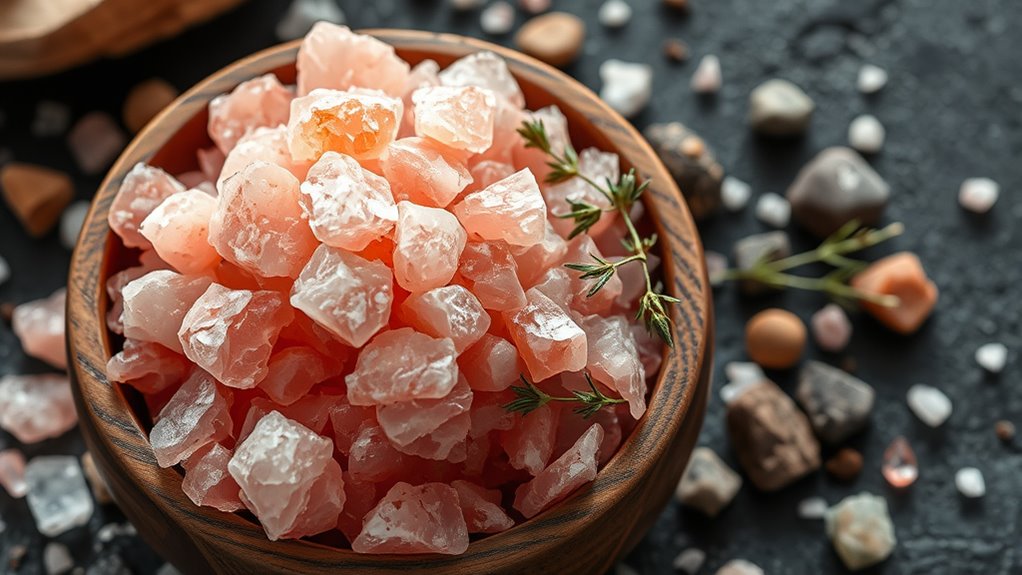
Although both Himalayan pink salt and sea salt offer essential minerals, Himalayan pink salt stands out because it contains up to 84 trace minerals like calcium, magnesium, potassium, and iron. When you look at the mineral profile of Himalayan salt, its mineral richness becomes clear.
The pink hue comes from iron oxide, a sign of its diverse mineral composition. This mineral spectrum is broader compared to regular sea salt, which often loses many trace nutrients through refining.
A detailed mineral analysis shows that these trace minerals, though present in small amounts, contribute to both the flavor and nutritional value of Himalayan salt. You’ll appreciate that its mineral content is naturally preserved, ensuring you get these benefits without additives or heavy processing.
This naturally preserved mineral profile makes Himalayan pink salt an excellent choice when you want a salt that offers more than just sodium chloride. Its trace minerals truly set it apart, giving you a richer, more complex mineral spectrum.
How Minimal Processing Preserves Trace Minerals
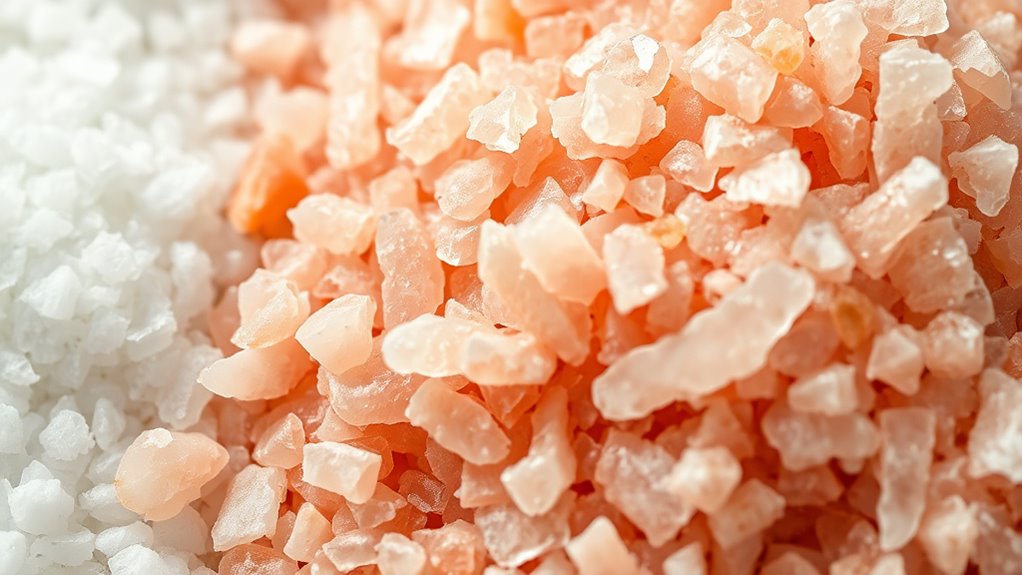
Because Himalayan pink salt undergoes minimal processing, it retains its rich array of natural trace minerals that many refined sea salts lose during extensive filtration and evaporation.
Minimal processing helps Himalayan pink salt preserve essential trace minerals lost in refined sea salts.
When you choose Himalayan pink salt, you benefit from mineral preservation that comes from traditional extraction methods and low-impact hand-mining.
Unlike sea salts subjected to heavy refinement and purification, Himalayan pink salt experiences minimal washing, which helps maintain its full mineral profile.
This minimal processing prevents the removal of natural minerals, ensuring that up to 84 trace minerals and elements remain intact.
By avoiding industrial treatment, Himalayan pink salt keeps its unique mineral diversity, which contributes to its nutritional value.
When you opt for Himalayan pink salt, you’re choosing a product where mineral preservation is prioritized through gentle, traditional extraction rather than aggressive refinement.
This careful approach ensures you get the maximum benefits from the salt’s natural minerals, setting it apart from more processed sea salts.
The Unique Pink Color: Visual Appeal and Mineral Source
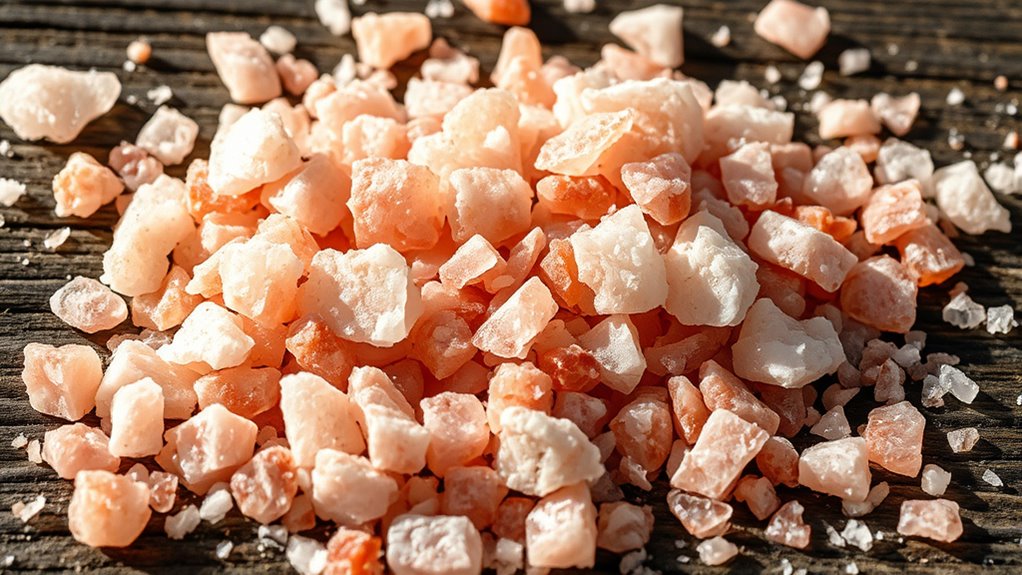
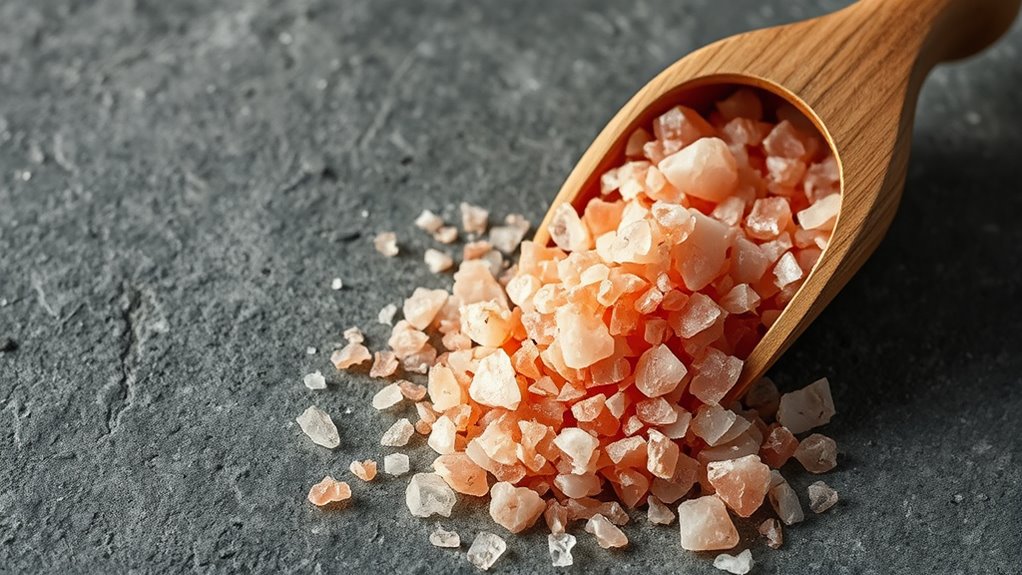
The rich mineral content preserved through minimal processing does more than boost nutritional value—it also gives Himalayan pink salt its signature color. This salt’s distinctive pink color comes from iron oxide, a key mineral source contributing to its colorful appearance.
Unlike sea salt, Himalayan pink salt is mineral-rich, containing over 80 trace minerals that influence its hue, which ranges from light pink to deep red depending on the mineral content. These trace minerals come from ancient deposits formed millions of years ago, making Himalayan salt truly unique.
When you use this salt in your kitchen, its vibrant pink color enhances culinary presentation, turning simple dishes into visually appealing creations. So, beyond taste and nutrition, the striking pink color of Himalayan salt offers an aesthetic advantage that sea salt simply can’t match.
That’s why it’s a favored choice for both chefs and home cooks looking to add flair to their meals.
Lower Sodium Levels Compared to Sea Salt
When you choose Himalayan pink salt over sea salt, you often get a slightly lower sodium content. It typically ranges between 380 to 540 mg per teaspoon compared to about 540 mg in sea salt.
Thanks to its unique mineral content and crystal structure, Himalayan salt offers a natural sodium reduction. Its less processed nature means fewer impurities and marginally lower salt levels.
This makes it a smarter choice if you’re mindful of sodium intake. This subtle difference supports better health without sacrificing the essential minerals you need.
| Salt Type | Sodium Content (mg) | Mineral Content |
|---|---|---|
| Himalayan Salt | 380 – 540 | Rich in trace minerals |
| Sea Salt | ~540 | Variable mineral levels |
| Processed Salt | ~2300 | Minimal minerals |
| Sodium Reduction | Moderate | Due to crystal structure |
| Health Impact | Lower sodium intake | Enhanced mineral balance |
Choosing Himalayan salt means embracing both flavor and mindful sodium levels.
Himalayan Salt’s Flavor Profile for Cooking and Finishing
If you want to elevate your dishes with both taste and texture, Himalayan pink salt offers a distinctive flavor profile that stands out. Its mineral-rich composition delivers earthy notes and a slightly richer taste than regular sea salt, thanks to trace minerals like iron and magnesium.
When used as a finishing salt, Himalayan salt’s larger, flaky crystals dissolve slowly, adding a subtle crunch that enhances your dish’s texture. These flaky crystals also provide a beautiful pink hue that boosts the visual appeal of your gourmet dishes, making them more inviting.
Beyond taste, Himalayan salt’s unique pink coloration from iron oxide brings a vibrant touch to your culinary presentation. Whether you sprinkle it over salads, grilled meats, or roasted vegetables, this salt guarantees both flavor and visual appeal. It’s a perfect choice for culinary enhancement that impresses your guests every time.
Culinary and Non-Dietary Uses of Himalayan Salt
Although Himalayan salt is prized for its flavor, you’ll find it shines in many culinary and non-dietary roles as well. Its mineral-rich composition makes it ideal for salt blocks used in grilling and serving, offering a natural, non-toxic surface that enhances your culinary uses.
Himalayan salt’s mineral-rich nature makes it perfect for grilling blocks that enhance flavor and presentation.
These blocks not only add subtle seasoning but also bring a unique presentation to your dishes. Beyond the kitchen, Himalayan salt’s attractive pink hue and mineral composition make it popular for salt lamps, which create a warm ambiance and are favored in home decor.
You can also explore salt caves, where this mineral-rich salt is believed to promote relaxation and respiratory benefits. Unlike sea salt, Himalayan salt is free from microplastic contamination due to its deep-earth mining process, making it a cleaner choice for both eating and non-dietary applications.
Its versatility truly sets it apart in both taste and function.
Hydration Benefits of Himalayan Salt
How can Himalayan pink salt improve your hydration? This salt’s unique mineral profile supports your body’s water absorption and fluid retention more effectively than many other salts.
Here’s how Himalayan salt benefits your hydration:
- It contains less sodium per teaspoon, helping you manage hydration without overloading on salt.
- Its mineral content, including trace minerals like magnesium and potassium, promotes electrolyte balance essential for proper hydration.
- Using Himalayan salt in salt water—either for drinking or soaking—can replenish minerals and enhance fluid absorption.
- Its larger crystal size and mineral profile may improve hydration efficiency, supporting better water retention and muscle recovery.
Fewer Additives and No Anti-Caking Agents in Himalayan Salt
You’ll notice Himalayan pink salt is minimally processed, which helps preserve its natural purity. Unlike many sea salts, it doesn’t contain additives or anti-caking agents.
That means you get a more natural seasoning without extra chemicals. It’s pretty great if you’re looking to keep things simple and clean in your cooking.
Minimal Processing Preserves Purity
Because Himalayan pink salt undergoes minimal processing, it retains its natural minerals and vibrant color without relying on additives. This minimal processing preserves the salt’s purity and natural composition, making it a healthier choice.
Here’s why it stands out:
- It’s hand-extracted and unrefined, keeping its natural minerals intact.
- The preservation process avoids additives, so you get pure salt without chemicals.
- Trace minerals remain in the salt, enhancing both flavor and nutritional value.
- Unlike many sea salts, it contains no anti-caking agents, maintaining a natural texture.
When you choose Himalayan pink salt, you’re opting for a salt that stays true to its natural origins. It’s free from heavy refining and artificial ingredients, so you get the real deal.
Free From Additives
Building on its minimal processing, Himalayan pink salt stands out for being free from additives, especially anti-caking agents commonly found in many sea salts. Because it’s minimally processed and hand-mined, you won’t find chemical additives or refining procedures that introduce impurities.
Many sea salts are refined and treated with anti-caking agents like calcium silicate to prevent clumping, meaning they contain synthetic substances you might want to avoid. In contrast, Himalayan salt remains natural and chemical-free, preserving its pure form without added substances.
When you choose Himalayan pink salt, you’re opting for a product with fewer additives, maintaining its natural integrity without compromising quality or flavor through unnecessary chemical treatments. This makes it a cleaner, more wholesome option compared to many processed sea salts.
No Anti-Caking Agents
Although many commercial sea salts contain anti-caking agents like calcium silicate to keep them free-flowing, Himalayan pink salt stays pure by containing none of these additives. When you choose Himalayan pink salt, you get a pure salt with natural crystals, free from anti-caking fillers.
It’s minimally processed, avoiding synthetic anti-caking additives found in refined salt. Plus, it’s hand-mined and naturally coarse, unlike processed sea salts that rely on chemicals.
Choosing this salt means you get a safer option, helping you avoid ingesting potentially undesirable anti-caking agents.
Aesthetic Appeal for Presentation and Table Use
You’ll notice Himalayan pink salt instantly brightens up any dish with its unique pink hue. Its natural mineral patterns add an elegant touch that makes your table presentation stand out.
Using this salt brings a sophisticated, artisanal vibe to your culinary displays. It’s a simple way to add a bit of charm and style to your meals.
Unique Pink Hue
Because of the iron oxide in Himalayan pink salt, it boasts a vibrant pink hue that stays bright even after grinding. This natural color offers more than just a pretty look; it enhances your culinary presentation and serves as a visual indicator of its rich mineral content.
When you use Himalayan pink salt, you enjoy:
- A consistent pink hue that elevates your dishes’ aesthetic appeal.
- A natural color that sets it apart from ordinary sea salt.
- Decorative salt qualities, perfect for gourmet presentation.
- A vibrant pink tone that adds flair to table use and garnishing.
This unique pink hue makes Himalayan salt an ideal choice for anyone wanting to combine flavor with striking visual appeal. It’s really a win-win for both taste and looks!
Elegant Table Presentation
When you bring Himalayan pink salt to the table, its vibrant pink hue instantly elevates the entire presentation, adding a touch of elegance and sophistication. This mineral-rich salt’s natural look enhances the visual appeal of gourmet dishes, making each bite feel luxurious.
The larger, flaky salt crystals create an artisanal effect that’s perfect for finishing plates with style. Himalayan pink salt’s unique color complements various tableware and decorative themes, setting it apart from ordinary sea salt.
You can also use it to craft stunning salt towers or serve meals on salt block platters, adding both function and flair. Choosing Himalayan pink salt for your table presentation means you’re not just seasoning food—you’re elevating the entire dining experience with decorative salt that dazzles the eye.
Natural Mineral Patterns
Although sea salt tends to show a uniform, pale appearance, Himalayan pink salt captivates with its rich mineral patterns that bring a natural artistry to your table. Its mineral composition includes up to 84 trace elements, giving it a colorful appearance far beyond sea salt’s usual white or grey crystals.
This mineral diversity creates a unique, mineral-rich texture perfect for presentation.
Here’s why Himalayan pink salt stands out:
- Natural mineral distribution forms striking, varied patterns.
- Mineral content, especially iron oxide, adds a warm pink hue.
- Mineral pattern enhances visual appeal on serving platters.
- Mineral-rich salt elevates décor in lamps and finishing salts.
You’ll love how its natural minerals add both flavor and beauty.
Sustainable and Traditional Mining Practices of Himalayan Salt
While exploring the benefits of Himalayan pink salt, you’ll appreciate that its mining relies on traditional hand-mining techniques practiced for centuries in Pakistan. Himalayan salt mining taps into ancient underground deposits, reducing environmental impact compared to large-scale sea salt evaporation.
These sustainable mining methods prioritize eco-friendly extraction, preserving mineral preservation and cultural heritage. Because the salt comes from deep underground, it avoids microplastic contamination common in sea salt.
Plus, minimal processing helps maintain its natural qualities while supporting local communities.
| Aspect | Himalayan Pink Salt | Sea Salt |
|---|---|---|
| Mining Method | Traditional hand-mining | Large-scale evaporation |
| Environmental Impact | Low, eco-friendly extraction | Higher, with land and water use |
| Contamination Risk | Minimal microplastic contamination | Higher contamination risk |
| Mineral Preservation | High, minimal processing | Often refined, less natural |
You can trust Himalayan salt mining to honor both the environment and cultural heritage.
Frequently Asked Questions
Is Himalayan Pink Salt as Healthy as Sea Salt?
Yes, you can consider Himalayan pink salt as healthy as sea salt since both have similar sodium levels.
However, pink salt offers more trace minerals. But these don’t substantially impact your overall health at normal intake.
Which Is Better Himalayan Salt or Sea Salt?
You’ll find Himalayan salt contains up to 84 trace minerals, making it better than sea salt for flavor and nutrition.
You’ll enjoy its purity and natural minerals without additives, enhancing your dishes with unique taste and health benefits.
What Are the Disadvantages of Himalayan Pink Salt?
You’ll face higher costs, potential heavy metal exposure, and inconsistent mineral content with Himalayan pink salt. It may also contain contaminants, lacks iodine, and could increase deficiency risks if you rely on it exclusively.
And honestly, if you’re using it as your only salt source, that iodine deficiency risk is something to keep in mind. Plus, the price tag can be a bit of a shock compared to regular table salt. So, it’s good to weigh these factors before making the switch.
Do You Drink Pink Salt in the Morning or at Night?
You can drink pink salt water either in the morning to boost hydration and energy or at night to help relax and improve sleep.
It really depends on what feels best for your body and routine. Just listen to yourself and see what works!
Conclusion
Choosing Himalayan pink salt is like finding a hidden treasure chest—packed with rich minerals, natural flavor, and fewer additives than sea salt. You’ll enjoy its unique color, lower sodium, and hydration benefits while knowing it’s sustainably mined.
Its minimal processing keeps those trace minerals intact, making your meals not only tastier but healthier. So, why settle for ordinary when Himalayan pink salt offers so much more for your kitchen and table?
When you choose Himalayan pink salt over sea salt, you’re getting a natural, mineral-rich option that enhances flavor and supports better health. Its sustainable mining and lower sodium content make it a smart choice for anyone wanting to improve hydration and enjoy natural seasoning. So go ahead, elevate your cooking with Himalayan pink salt—your taste buds and body will thank you!