
How to Use Epsom Salt to Help Athlete’s Foot
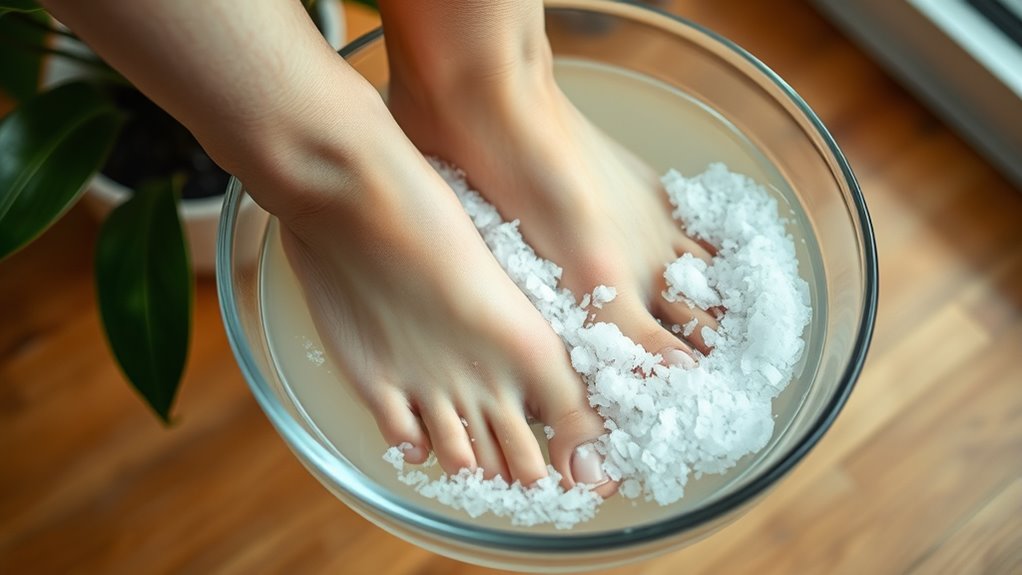
To help athlete’s foot, soak your feet in warm water (92°F–100°F) with ½ to ¾ cup of dissolved Epsom salt for 20–30 minutes. This simple Epsom salt soak can soothe irritation and help reduce inflammation, especially on the affected areas.
After soaking, make sure to dry your feet thoroughly, paying close attention to the spaces between your toes. Keeping your feet dry is super important to prevent the fungus from thriving.
Next, apply a moisturizer to prevent dryness and cracking. Use this soak once or twice a week, and follow up with antifungal treatments to boost healing and keep moisture under control.
Don’t forget, good foot hygiene and regular care routines are key to reducing symptoms and avoiding athlete’s foot from coming back.
You’ll find more tips to enhance your foot health as you go along!
Key Takeaways
- Soak your feet in warm water (92°F–100°F) with ½ to ¾ cup of Epsom salt for about 20–30 minutes. This helps reduce fungal infection and inflammation.
- After soaking, make sure to dry your feet thoroughly, especially between the toes. Moisture buildup there can encourage fungal growth.
- Try using Epsom salt soaks once or twice a week. You can combine this with exfoliation to get rid of dead skin and reduce fungal buildup.
- Once you’re done soaking, apply an antifungal moisturizer or foot powder. This helps keep your feet dry and supports healing.
- Don’t forget to maintain good daily foot hygiene and wear breathable shoes. These habits boost the effectiveness of Epsom salt treatments and help prevent the fungus from coming back.
How to Prepare and Use an Epsom Salt Foot Soak for Athlete’s Foot
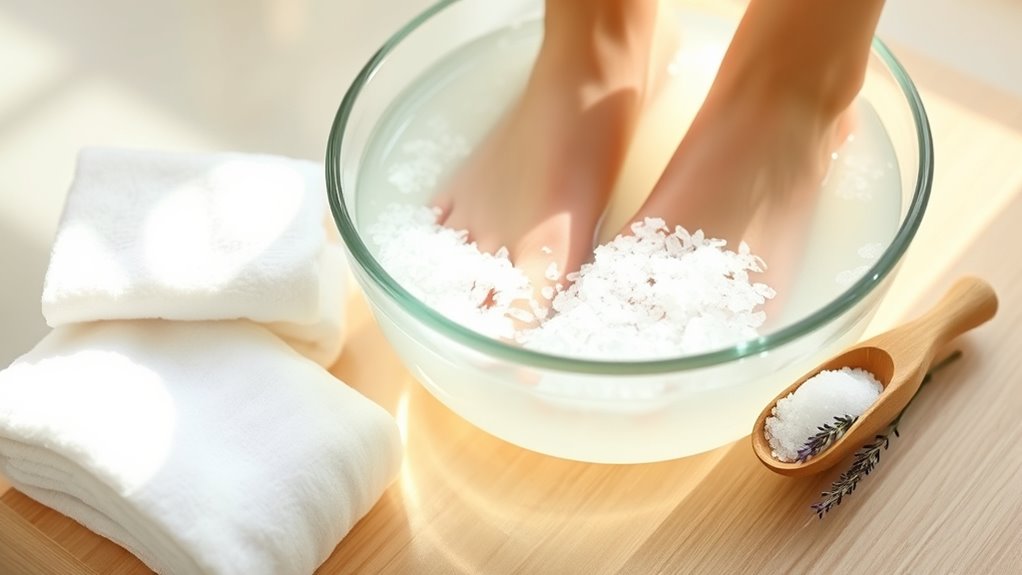
Before you start, fill a basin with warm water between 92°F and 100°F to soothe soreness effectively. Add half to three-quarters of a cup of Epsom salt, stirring until it dissolves completely.
This soak preparation harnesses the antifungal properties of Epsom salt, which can help reduce the fungal infection causing athlete’s foot. Soak your feet for 20 to 30 minutes, ensuring all affected areas are submerged.
After soaking, dry your feet thoroughly, especially between the toes, to maintain proper moisture control and prevent further fungal growth. This step is essential for good foot hygiene and overall foot health.
Applying a moisturizer afterward helps combat dry skin that can result from the soak. Regularly using this Epsom salt foot soak supports healing by soothing irritation and controlling moisture, key factors in managing athlete’s foot effectively.
Foot Care Tips to Speed Healing and Prevent Athlete’s Foot Recurrence
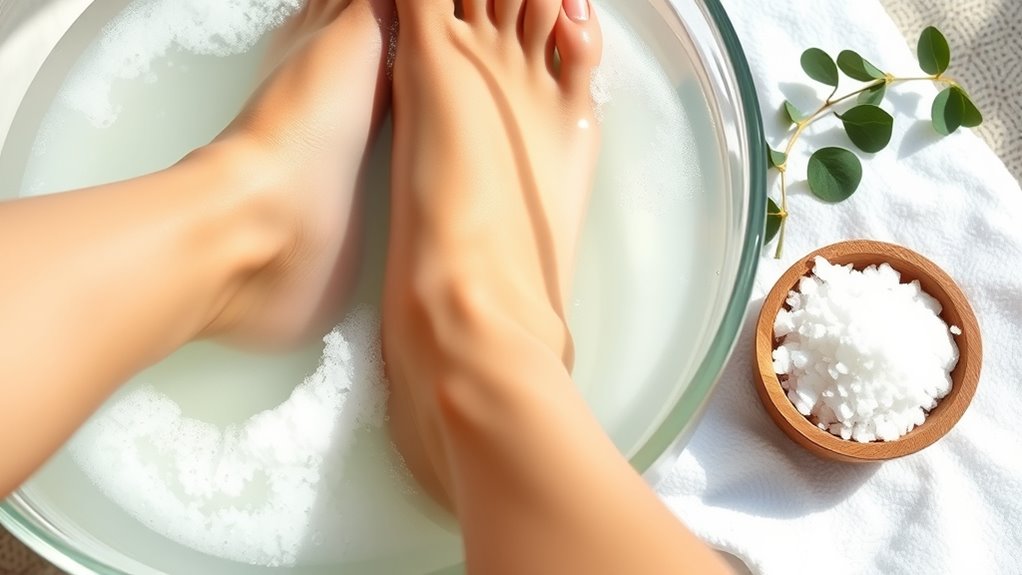
While soaking your feet in Epsom salt helps reduce inflammation, maintaining proper foot care is essential to speed healing and prevent athlete’s foot from coming back. After your Epsom salt foot soak, make certain to dry your feet thoroughly, especially between the toes, to keep moisture at bay.
Moisture control is key because damp environments encourage fungal infection and athlete’s foot recurrence. Practice good foot hygiene by washing your feet daily and wearing breathable shoes that allow air circulation.
Use Epsom salt soaks once or twice a week to exfoliate dead skin and reduce fungal growth. Follow up with an antifungal moisturizer or foot powder to maintain foot dryness and support foot health.
These combined steps create an environment that’s hostile to fungus, helping you heal faster and avoid future flare-ups. Consistent foot care, alongside your Epsom salt treatments, ensures your feet stay healthy and fungus-free.
Frequently Asked Questions
What Kills Athlete’s Foot Fungus Naturally?
You can kill athlete’s foot fungus naturally by applying tea tree oil, soaking your feet in Epsom salt, using vinegar soaks, and rubbing coconut oil.
Keep your feet dry and ventilated to prevent fungal growth. It really helps to let your feet breathe and stay clean throughout the day.
Do I Need to Rinse My Feet After Soaking in Epsom Salt?
You should rinse your feet after soaking. Rinse to remove salt and prevent dryness.
It also helps prepare your skin for any treatments you might want to apply afterward. Then, be sure to dry your feet thoroughly.
This avoids moisture buildup and keeps your feet healthy and fungus-free. Easy, right?
Does Epsom Salt Get Rid of Fungal Infections?
Epsom salt doesn’t get rid of fungal infections on its own. It soothes and helps skin heal, but you’ll need antifungal treatments to effectively eliminate athlete’s foot and prevent the fungus from coming back.
How Long Does It Take for Epsom Salt to Work for Feet?
It might feel slow at first, but you’ll usually start seeing relief from athlete’s foot within one to two weeks of soaking your feet regularly.
Stick with it, and your symptoms should steadily improve over time.
Conclusion
Just like a gentle tide washing away the footprints on a sandy shore, your Epsom salt soak helps cleanse and heal your athlete’s foot, restoring balance and comfort. It works by soothing irritation and reducing inflammation.
By caring for your feet regularly with Epsom salt soaks, you create a protective barrier, much like a lighthouse standing firm against stormy waves. This simple routine helps keep the fungus at bay and promotes healthy skin.
Keep up with these easy rituals, and you’ll not only heal your athlete’s foot but also build resilience. Using Epsom salt consistently can prevent future flare-ups, ensuring your steps remain strong and confident every day. Remember, taking care of your feet with Epsom salt is a natural, effective way to support foot health and comfort.